Wasteland and Degraded Land Reclamation and Development
By TBGF Agrotech Pvt. Ltd.
Overview
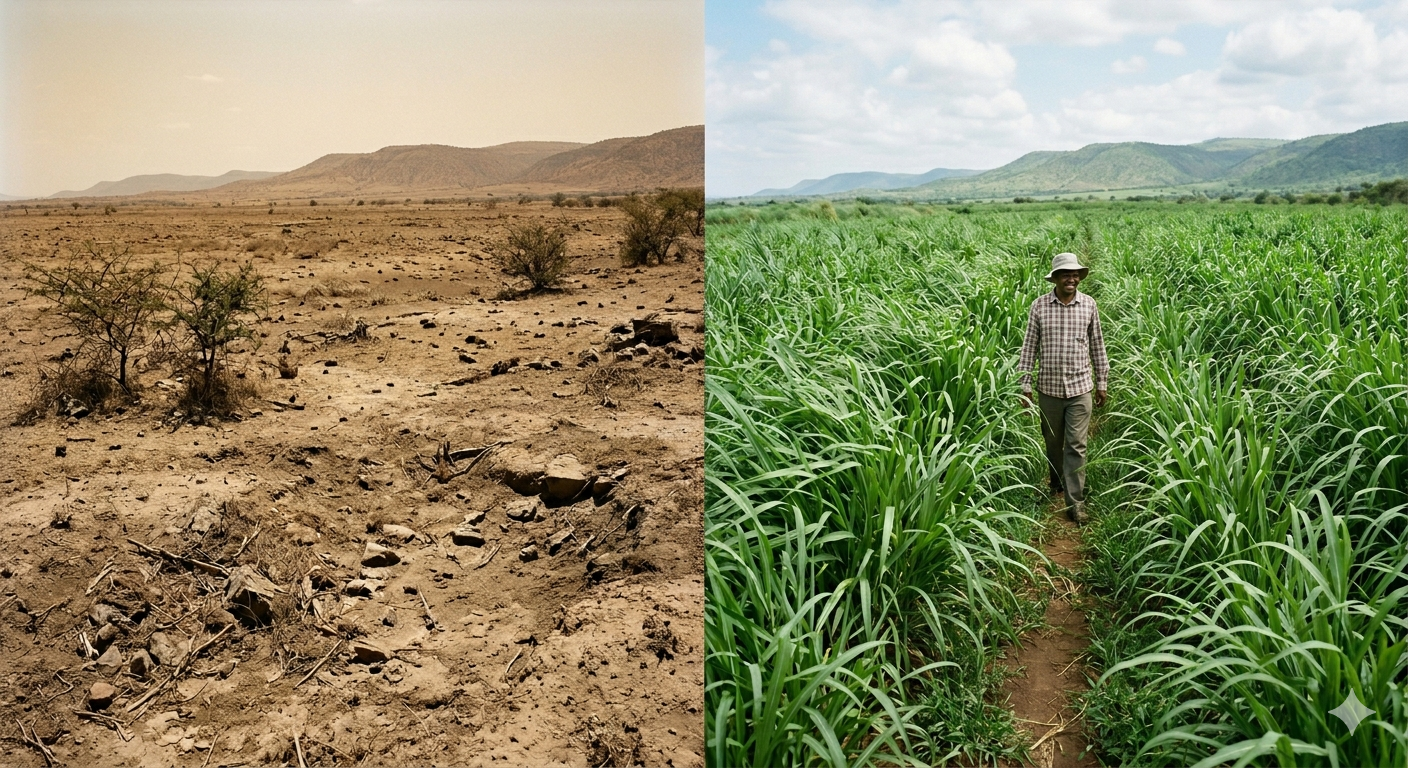
TBGF Agrotech’s “Barren to Bounty” initiative transforms unproductive, degraded, or underutilized lands into thriving, economically productive landscapes. By integrating sustainable agriculture, agroforestry, and modern land management techniques, we regenerate soils, improve biodiversity, conserve water, and create consistent revenue streams for landowners and investors.
Why Wasteland Development is Necessary
Developing wastelands is critical for environmental, economic, and social reasons:
- Carbon Sequestration & Climate Commitments
- Supports India’s obligations under the Paris Agreement by creating carbon sinks.
- Enables participation in carbon credit programs, which are expected to grow in future demand.
- Reduces net greenhouse gas emissions, contributing to global climate mitigation.
- Food & Fodder Security
- Expands agriculture and fodder production to meet growing population and livestock needs.
- Ensures nutritious feed supply for dairy and meat industries through integrated fodder crops and TMR feed systems.
- Soil & Water Conservation
- Prevents soil erosion, nutrient loss, and water runoff from degraded lands.
- Enhances groundwater recharge and soil fertility through organic matter enrichment and rainwater harvesting.
- Biodiversity & Ecosystem Restoration
- Restores native flora and fauna, supporting ecological balance.
- Agroforestry and mixed cropping improve resilience against climate change and pest outbreaks.
- Economic & Livelihood Benefits
- Generates multiple income streams: agriculture, horticulture, timber, biofuel crops, and carbon credits.
- Provides employment and skill development for local communities.
- Combating Desertification & Land Degradation
- Stabilizes soils and prevents further desertification, turning barren areas into productive landscapes.
- Urbanization & Industrial Pressure Mitigation
- Converts underutilized land into productive landscapes, reducing pressure on fertile lands lost to urbanization or industrial use.
In essence, wasteland development is a strategic necessity—environmentally, socially, and economically.
Understanding Problematic Lands
Problematic lands include:
- Barren land: Minimal vegetation, poor fertility.
- Degraded soil: Nutrient-depleted, eroded, saline, or alkaline areas.
- Wastelands: Abandoned or underutilized lands impacted by deforestation, overgrazing, or industrial activity.
Reclamation and Regeneration Process
Our multi-phase approach ensures long-term sustainability and productivity:
Phase 1: Assessment and Planning
- Soil and land analysis (physical, chemical, biological)
- Identification of degradation factors
- Custom reclamation strategy per site
Phase 2: Soil & Water Rejuvenation
- Organic enrichment using compost, green manures, and biofertilizers
- Water harvesting structures: check dams, contour bunding, rainwater harvesting
- Soil pH correction, nutrient management, and microbial enhancement
Phase 3: Land Development
- Afforestation, agroforestry, horticulture
- Sustainable fodder and crop cultivation
- Micro-irrigation or drip irrigation setup
Phase 4: Maintenance & Monitoring
- Ongoing soil and crop health monitoring
- Eco-friendly pest and disease management
- Annual productivity and revenue reporting for investors
Revenue Generation Models
Investors and landowners benefit through:
- Sale of horticulture, agroforestry, and fodder produce
- Carbon credit generation via afforestation and soil carbon sequestration
- Leasing land for contract farming and TMR feed cultivation
- Integration with government wasteland development schemes
- Participation in investor programs for profit-sharing based on land productivity
Investor Participation Program
TBGF allows individuals and institutions to invest in wasteland reclamation projects, with returns from:
- Harvested produce sales
- Agroforestry timber and biomass
- Long-term land appreciation and carbon credits
Program Highlights:
- Customizable minimum land parcel size
- Transparent profit-sharing agreements
- Regular reporting of project progress and financial outcomes
- Professional management by TBGF’s team of soil and land reclamation experts
Expert Team
- Soil scientists and agronomists
- Agroforestry and horticulture specialists
- Project managers with rural development experience
- Financial and revenue planning advisors
Benefits
- Environmental: Soil regeneration, carbon sequestration, water conservation, biodiversity enhancement
- Economic: Multiple revenue streams from agriculture, forestry, bio-products, and carbon credits
- Social: Employment for local communities, skill development, rural empowerment
- Sustainable: Long-term land productivity and climate resilience
Terms and Conditions
- Landowners must provide proof of ownership or leasing rights
- Investments are project-specific with defined timelines and revenue sharing
- TBGF ensures full transparency, but returns depend on land type and management
- Compliance with Indian agricultural and environmental regulations is mandatory
- Participation requires adherence to project guidelines for soil and water management
Our Values
- Sustainability: Every project preserves natural resources and regenerates degraded lands
- Transparency: Investors and stakeholders have full visibility of activities
- Accountability: Commitments to timelines and deliverables are strictly followed
- Innovation: Modern agro-technologies integrated with traditional knowledge
Project Timeline
| Phase | Timeline | Activities |
|---|---|---|
| Assessment & Planning | 1–2 months | Soil testing, land mapping, strategy development |
| Soil & Water Rejuvenation | 3–6 months | Soil enrichment, water structures, amendments |
| Land Development | 6–12 months | Planting, irrigation setup, crop/fodder integration |
| Monitoring & Optimization | Ongoing | Annual review, productivity enhancement, investor reporting |
Note: Timelines may vary depending on land size, degradation level, and climate conditions. TBGF ensures commitments are met per project plan.